|

教师个人网页
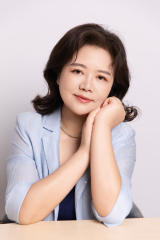 |
丁云桥 |
|
学科: 直属机构: 化学与化工学院 毕业院校: 山东大学(Shandong University) 学历: 博士研究生 职务: 部门/院系: 化学与化工学院 办公地址: 通讯地址: 电话: 15066105075 邮箱: dyq@qlu.edu.cn |
|
手机扫描二维码 即可访问本教师主页 |
个人简介 华堂来紫燕,乔木倚青云 Paulo Freire: “Education either functions as an instrument which is used to facilitate the integration of the younger generation into the logic of the present system and bring about conformity, or it becomes the 'practice of freedom,' the means by which men and women deal critically and creatively with reality and discover how to participate in the transformation of their world. I, however, would rather choose the latter. 教育经历2006/09 - 2009/12, 山东大学,高分化学与物理,博士 Shandong University, Ph.D. in Polymer Chemistry and Physics 2003/09 - 2006/06,山东大学,理论与计算化学,硕士 Shandong University, M.S. in Theoretical and Computational Chemistry 工作经历2010/09 - 至今(Present),齐鲁工业大学,化学与制药工程学院,副教授 Qilu University of Technology, School of Chemistry and Pharmaceutical Engineering, Associate Professor 2011/08 - 2013/08,中山大学(台湾省),化学系,博士后研究 Sun Yat-sen University (Taiwan, China), Department of Chemistry, Postdoctoral Researcher 1996/07 - 2003/09,山东省化工研究院,生物与化学重点实验室,工程师 Shandong Chemical Industry Research Institute, Key Laboratory of Biology and Chemistry, Engineer 社会职务中国化学会会员(Member of the Chinese Chemical Society) 全国研究生教育评估监测专家库专家(Expert of the National Graduate Education Evaluation and Monitoring Expert Pool) 中国高分子专家智库委员会委员(Member of the China Polymer Expert Think Tank Committee) 《山东化工》 编委 “Polymers”,“Chemical Engineering Science”,"Materials Science and Engineering","Journal of Theoretical and Computational Chemistry”,“Journal of Computational Biophysics and Chemistry”, etc. reviewer. 荣誉及奖励科学院究研究领域 化学反应机理(理论计算化学) Reaction Mechanisms (Theoretical and Computational Chemistry) 天然高分子物理与化学性质的理论和实验研究 Theoretical and Experimental Studies on the Physical and Chemical Properties of Natural Polymers 有机硅高分子物理与化学性质的理论和实验研究 Theoretical and Experimental Studies on the Physical and Chemical Properties of Organosilicon Polymers 论文成果
专利 著作成果
科研项目
科研项目纵向 开授课程结构化学(双语)/Structural Chemistry (Bilingual) 无机化学/Inorganic Chemistry 无机化学实验(双语)/Inorganic Chemistry Experiment (Bilingual) 化学专业英语/Professional English for Chemistry 有机硅日用化学品/Organosilicon Daily Chemicals 高分子物理/Polymer Physics 教学成果开设课程 结构化学(双语)/Structural Chemistry (Bilingual) 无机化学/Inorganic Chemistry 无机化学实验(双语)/Inorganic Chemistry Experiment (Bilingual) 化学专业英语/Professional English for Chemistry 有机硅日用化学品/Organosilicon Daily Chemicals 高分子物理/Polymer Physics 教学成果 教研项目(主持): 1、“PBL导向的“人工智能+”无机化学实验教学改革”齐鲁工业大学2026年度“人工智能+”课堂教学改革项目(452401130111) 2、“基于知识图谱的新形态《无机化学实验》课程重构”课堂教学齐鲁工业大学2024年度实验教学和教学实验室建设研究项目(2024syyb07) 3、“混合式无机化学实验双语教学模式探索”齐鲁工业大学2020年校级教研项目(2020yb70) 课程(主持): 《无机化学实验》: 2025年山东省高等学校课程联盟“数智技术赋能课 程建设”案例 2024年度国家安全教育优质课 2022-2023学年第二学期课程思政好教案 教材: 第一主编身份出版教材《Experiments of Inorganic Chemistry and Chemical Analysis》(化学工业出版社 2021 ISBN 978-7-122-35942-1)获2022年度校级优秀教材。 教学比赛(个人): 2023年度齐鲁工业大学混合式教学设计创新比赛二等奖 教研论文(一作): 1、“基础无机化学实验”知识图谱智慧课堂的教学创新与改革 2025新时代高校化学化工教学改革与创新交流会论文集 2、 将安全习惯根植于化学实验教学活动 教育教学论坛 2023 3:173-176。 3、“互联网+”时代无机化学实验课程多元化教学模式的探索 第十三届大学化学化工课程报告论坛(2018)论文集。 学生指导: 本科一作论文(通讯作者): 1、郝星海等 超声辅助柠檬酸法优化草鱼鱼鳞脱钙工艺 食品工业2022 43(5): 107-111。 2、张峥等 明胶/二氧化硅杂化微球的研究进展 应用化工 2022 51(2): 231-234。 3、马东等 明胶基生物可降解薄膜的研究进展 食品工业科技 2021 42(11): 259-365。 4、李泽民等 五因素混水平正交实验优化鱼鳞胶原提取工艺 山东化工 2019 48: 18-24。 “建行杯”第九届山东省大学生科技创新大赛 白丽汀 “鱼鳞胶原提取工艺的优化” 吴延鸿 “有机聚硅氧烷无氧热解机制的理论研究” 2023年齐鲁工业大学大学生节能减排社会实践与科技竞赛 秦佳琦 “明胶基生物可降解薄膜” 2022届优秀毕业设计(论文) 张峥 “聚多巴胺明胶杂化微球的制备” 石梦瑶 “胶原基复合膜的制备与表征” 大学生创新创业训练项目: 2024(重点)、2020(xj202010431117)、2019(xj201910431081)、2018(xj201810431003,重点)年大学生创新创业训练计划项目。 2021年度齐鲁工业大学(山东省科学院)“百优学业导师” 班主任荣誉: 应化中外24-2在2024-2025学年获“先进班集体”荣誉称号。
获奖信息招生信息诚爱四到贤生,心到、眼到、手到、口到 匠心铸凿君璧,精学,义明,心远、志达 Sincere love and the fourfold attentions—heart, eyes, hands, and mouth—nurture a worthy student. With artisan spirit, carve a noble jade; pursue refined learning, clear righteousness, lofty vision, and fulfilled ambition. 欢迎报考齐鲁工业大学(齐工大)理论计算化学团队本人(15066105075,微信同号)的研究生! 本人主要研究方向聚焦于微观粒子反应机理、材料结构设计与性能预测,具体包括: · 硅氢加成等化学反应的微观机理研究; · 特定反应催化剂的设计与性能预测; · 有机硅高分子的热解机制研究; · 功能高分子的定向设计与性能预测。 研究手段:基于数学方法和原理,结合物理模型,依托高性能服务器,采用密度泛函理论(DFT)、分子动力学(MD)等现代计算方法,力求在原子与电子尺度上深入洞悉化学过程,对真实体系进行建模与计算,并实现材料与分子的理性设计。量子计算算力的高速发展充分发挥了理论计算化学的前瞻性和精准预测功能。 AI和理论计算化学都可以研究“给定原子核与电子结构,体系会如何演化、性质如何”。理论计算会产生大量结构—性质数据, AI 更擅长从数据中学习复杂映射关系。AI 是理论计算化学的“加速器”,利用AI 的聚类、降维、符号回归等方法,从高维数据中发现隐藏的构效关系,提出新的物理图像或经验规律,反过来指导理论建模。 如果你对理论计算化学感兴趣,渴望在微观世界中探索化学本质,欢迎加入理论与计算化学团队,一起用现代量子计算驱动化学创新。 Welcome to apply for graduate studies with me in the Theoretical and Computational Chemistry team at Qilu University of Technology (QLUT)! My main research focuses on the reaction mechanisms of microscopic particles, material structure design, and performance prediction, specifically including: · Microscopic mechanism studies of chemical reactions such as hydrosilylation; · Design and performance prediction of catalysts for specific reactions; · Pyrolysis mechanisms of organosilicon polymers; · Targeted design and performance prediction of functional polymers. Research methods: Based on mathematical methods and principles, combined with physical models, and relying on high-performance servers, we adopt modern computational methods such as density functional theory (DFT) and molecular dynamics (MD), striving to gain deep insight into chemical processes at the atomic and electronic scales, model and compute real systems, and achieve rational design of materials and molecules. The rapid development of quantum computing power fully leverages the foresight and precise predictive capabilities of theoretical computational chemistry. Both AI and theoretical computational chemistry can study given the atomic nuclei and electronic structure, how will a system evolve and what properties will it have. Theoretical computations generate large amounts of structure–property data, and AI excels at learning complex mapping relationships from data. AI serves as an accelerator for theoretical computational chemistry. By using AI methods such as clustering, dimensionality reduction, and symbolic regression, we can discover hidden structure–property relationships from high-dimensional data, propose new physical pictures or empirical rules, and in turn guide theoretical modeling. If you are interested in theoretical computational chemistry and eager to explore the essence of chemistry in the microscopic world, welcome to join the Theoretical and Computational Chemistry team, and together let us drive chemical innovation with modern quantum computing! 我的相册教师博客 |